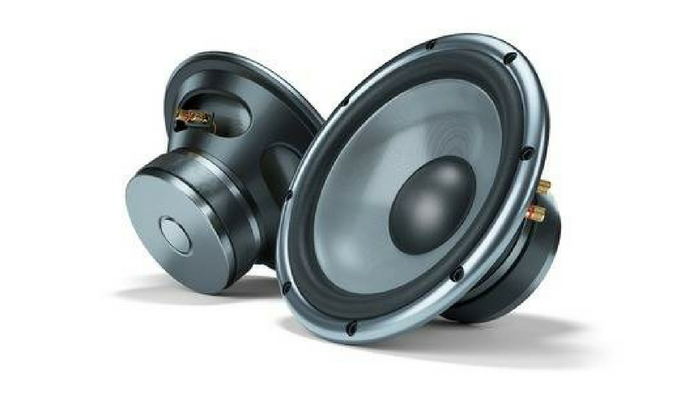
We’re often asked the question “what is better, a 2ohm or 4ohm subwoofer?” To answer that question, well need to start by asking whats the difference between a 2ohm subwoofer and 4ohm subwoofer?
Technically, they are different in only a few areas and that is:
- How much they cost.
- How much resistance one can get.
- How much power will pass through your subwoofers.
- How much dB (logarithmic unit to measure acoustics) they can produce.
2ohm
When picking subwoofers, you’ll look at the ohm, the SI unit of electrical resistance, this indicates to you the amount of power that the subwoofer will be able to hold and the amount of power it can transform into sound.
A subwoofer with a lower electrical resistance produces a louder sound than one with a high electrical resistance, which means that 2ohm subwoofers are louder than 4ohm ones.
Although louder, 2 ohm subwoofers are also more likely to produce a poorer quality of sound due to its’ power consumption.
4ohm
4 ohm subwoofers will have a higher electrical resistance, use way less energy and will, therefore, last longer than subwoofers with lower resistance.
They also produce less sound in comparison to the 2 ohm ones. However, the sound produced could be described as being more compact so the sound you get from it is a much better quality than the 2ohm subwoofers but not so much as to be easily noticed.
Depending on the brand of the subwoofer you choose to purchase, the price could range between $20 and $180.
Whats better, a 2ohm or 4ohm subwoofer?
The biggest difference is in their prices, but this also depends on the brand and size of subwoofers you choose. A 2ohm subwoofer would be pricier than a 4ohm subwoofer, a 2 ohm subwoofer would range between $50 and $200 depending on the brand you choose to purchase.
There is also a difference of about 2.5dB between a 2 ohm and a 4 ohm subwoofer which some may be able to notice while others may not.
The difference between 2 ohm and 4 ohm subwoofers is not great and they will produce a similar quality of sound if run in the same wattage. Watts and ohms are all part of a series of mathematical formulas that put them together such that when one of them changes in value, the other often does too.
A brief explanation taken from Crutchfield:
Amplifiers provide the electrical pressure in a circuit; ohms measure the resistance, or load, against that pressure; and watts measure how much power is released as work. So, using one of those math formulas, an amplifier that provides 100 watts of power through a 4-ohm speaker, will produce 200 watts through a 2-ohm speaker, because its easier to push that reduced load.
Comments (31)
2ohm monoblock amp too much power for 1 10" Memphis shallow 300watt sub
Please refer this link he dyno tests it and shows the actual output. It's real output at 2ohms is less than 300watts.
Many of the people that would be buying sub-woofers at 1 or 2 ohm would be of the sound pressure level (SPL) competitions and not go for quality. If you want to win competitions, SPL isn't everything. Go with accuracy, keeping all speakers in phase and going for clarity. The more clear and articulate your audio is, you can hear it further away. That's what turns heads, not just the boom-boom fuzz buckets that are SPL competitions for the most part.
What all of you need to understand about ohms that are listed on the speakers are for "direct current loads" or DC voltage, that is called "load resistance". Now, what you need to know is what the "alternating current loads are across the operating frequency spectrum", which is based on AC voltage (audio). AC resistance is called, "reactance". Now, across the lowest of the low that your sub-woofer can output to the high of the highs, the reactance will vary greatly, it won't be uniform across the spectrum. What can affect this reactance are many factors, wiring, type of wiring, gauge, what the metal wire is made of, the cladding (the covering of the wires), the termination of the wires, etc. There's so damn many parameters that people never take into consideration that will have a great impact on your sound and clarity of the sub-woofers.
The reason why you need ultra clear and accurate sound in the sub-woofers is because that's the part of the system that uses the most power. In order to move the stiff cones on many of these sub-woofers it takes quite a bit of audio power to find the sweet spot while driving them. Look for speakers that have a higher sensitivity as per Watt and the sensitivity across the operating spectrum, that too fluctuates with the reactance.
I hope this gives you all a lot more information to look up, rather than going with a speaker that has half the resistance; thats just plain drivel. If your amp can't do 1 or 2 ohms, don't try it, it could very easily end badly for you.
The reason why manufacturers of speakers don't want to post their reactance data is that is shows all the imperfections and down right inefficiencies of their products. If you know how to read all of that data, you can be much more informed buyer and put together the best system that will keep you happy not just during competitions but outside of them, too.
Just saw your post.. I remember going hard with my kicker competition set up back in early 90s.
Alpine amp / for alpine mods & highs
Balanced out great for sound and bass.
Total rated amperage of all the fuses (if more than one) x 10 = max wattage @ lowest listed ohm rating of your amp found on box or in manual maybe even online ( ???? big dummy math ???? ) boss is the worst always lying about specs!
Believe it or not most amplifier makers are not including a built in fuse anymore but including a inline fuse holder to put inline a few inches away from the amp personally i like the look of this but now the amp companys can lie easier need multimeters and oscilloscopes and amp dynos to test true specs
Thx Frank